
And here's what kills me. Founders treat mentorship like a networking checkbox. A coffee here. A LinkedIn add there. As if collecting smart people is the same as getting help. It isn't. So let's talk about how to actually find, vet, and work with someone whose experience maps onto your problem, instead of someone who just sounds impressive on a panel.
Table of Contents
- What Is a Growth-Stage Mentor and Why Does It Matter?
- How Do You Know You're Ready for a Growth-Stage Mentor?
- Startup Mentor Guide: Key Criteria for Choosing the Right Fit
- Where to Find a Growth-Stage Mentor
- Mentor vs. Coach vs. Advisor: What's the Difference?
- How Much Does a Growth-Stage Mentor Cost?
- Red Flags to Watch For When Vetting a Mentor
- Making the Most of the Relationship
- FAQ: Common Questions About Choosing a Startup Mentor
What Is a Growth-Stage Mentor and Why Does It Matter?
A growth-stage mentor is an operator, executive, or founder who's personally lived through the exact inflection point you're in right now (scaling a team, cracking a new market, getting ready for institutional money) and who gives you ongoing, informal guidance rather than billable deliverables. That last part matters. They're not a consultant handing you a deck. And they're not an early-stage mentor either, the kind who helps you validate an idea or polish your first pitch. Different job entirely.
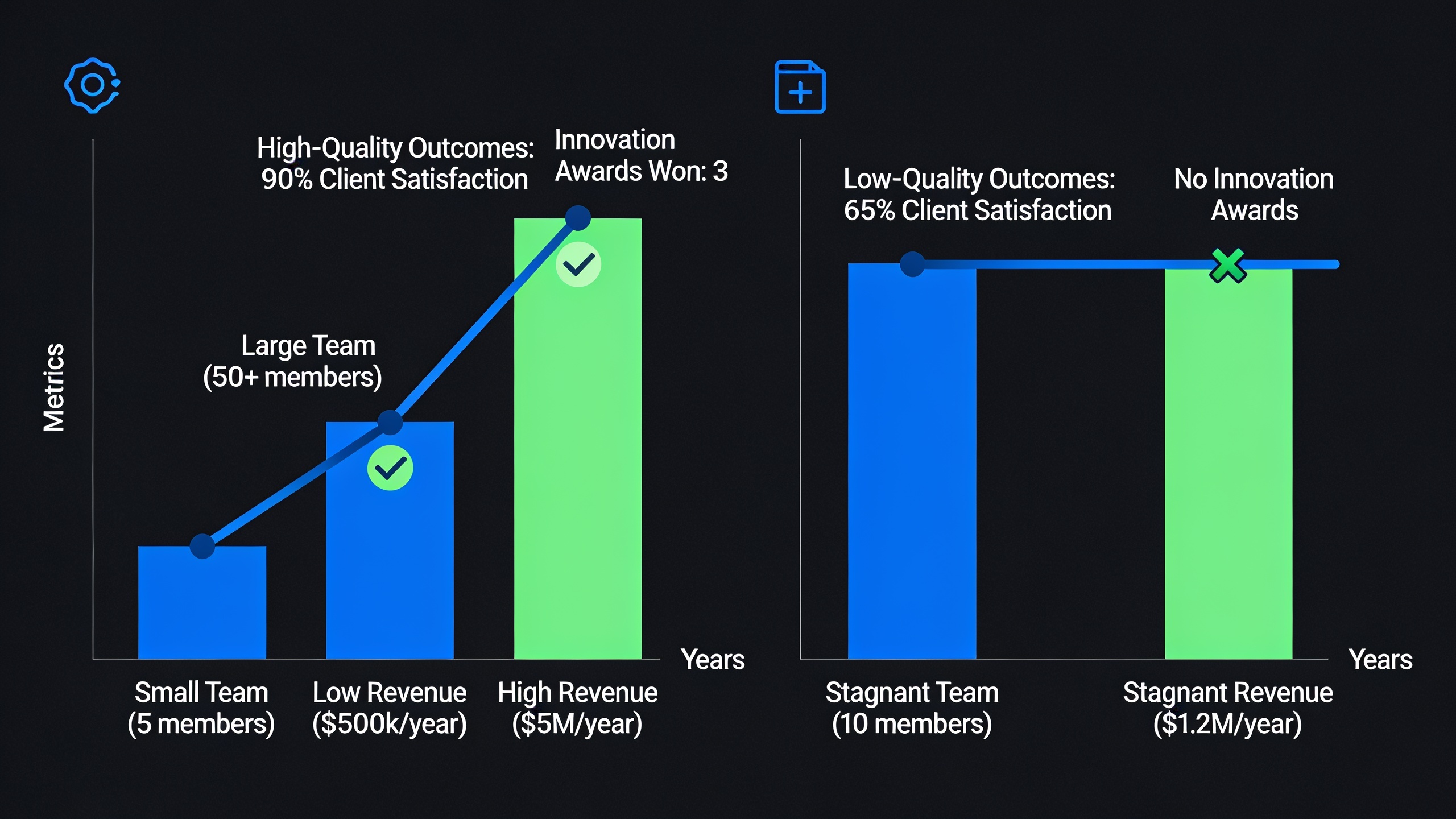
Why does stage matching matter this much? Because the problems facing a five-person startup and a fifty-person scale-up aren't the same problem at a bigger size. They're genuinely different problems. Someone who took a company from zero to $500,000 might have brilliant instincts about product-market fit and be completely useless when you ask them how to structure comp for a 20-person sales org, or what a reasonable Series B term sheet looks like, or how to stand up an actual HR function before something blows up. They just never had to.
That's the trap. Founders pick mentors on reputation instead of stage-specific experience, and the advice sounds totally reasonable right up until it steers you wrong. There's a whole breakdown of how this plays out in The Hidden Cost of Choosing the Wrong Business Advisor, and it's worth a read because the damage is usually quiet. You don't notice it until months later.
How Do You Know You're Ready for a Growth-Stage Mentor?
You're ready when your questions stop being "does this idea work" and start being "how do I scale the thing that's already working." That's the tell. It usually shows up in a few ways: you've got repeatable revenue but your processes are held together with duct tape, you're hiring faster than you can possibly onboard anyone, or investors are sniffing around and you don't have a clean growth story or unit economics to hand them.
A lot of founders come looking for this kind of help when they hit a plateau. You know the feeling. The tactics that used to reliably move the needle just... stop. One founder's version of exactly this is in How One Small Business Owner Finally Broke Through Her Growth Plateau, and what I like about it is that it doesn't frame the founder as incompetent. She wasn't. Some transitions just require somebody who's already made that particular leap. There's no shame in that.
Now, the flip side. If you're pre-revenue, or you're still figuring out whether anyone actually wants what you're building, a growth-stage mentor is the wrong tool. You'd be better off with an early-stage mentor or an accelerator until you've got some traction to scale.
Startup Mentor Guide: Key Criteria for Choosing the Right Fit
The most reliable way to choose a growth-stage mentor is to run every candidate through three non-negotiables, in this order: industry relevance, stage-specific experience, and demonstrated outcomes. Skip any one of them and you end up with a nice person who can't actually help you.
Industry Relevance
Industry relevance means they've operated in your sector, or one close enough that the customer behavior, sales cycles, and regulatory headaches actually transfer. Somebody who scaled a B2B SaaS company knows recurring revenue, churn, and enterprise sales cycles cold. But none of that automatically maps onto a consumer packaged goods brand or a services business. Different animal. This is exactly why the better matching platforms line up advisor experience against standardized industry categories before you ever see a shortlist, instead of relying on somebody's cousin's recommendation.
Stage-Specific Experience
This is the one everybody underweights, and honestly it might be the most important of the three. Ask blunt questions. What was your revenue and headcount when you hit this exact problem? What did you actually do about it, and what happened? A mentor who answers with specifics has almost certainly been where you are. A mentor who answers with platitudes... hasn't.
Demonstrated Outcomes
Demonstrated outcomes means you look past the title and ask what they actually built. "VP of Sales" tells you nothing on its own. Did they take a team from 5 reps to 50, or were they one of six VPs at a company that was already winning before they arrived? Big difference. Ask for the specifics, and if you get hand-waving, keep looking.
| Mentor Type | Best For | Typical Focus | Compensation Norm |
|---|---|---|---|
| Early-stage mentor | Pre-revenue founders validating an idea | Product-market fit, MVP feedback, first customers | Usually unpaid or equity-based |
| Growth-stage business mentor | Founders scaling revenue, team, or funding | Sales systems, hiring, fundraising readiness, operations | Often unpaid/informal, sometimes small equity or advisory fee |
| Paid business advisor/consultant | Founders needing a defined deliverable | Specific project: financial model, GTM plan, restructuring | Hourly or fixed-fee |
| Executive coach | Founders working on leadership skills and decision-making | Personal effectiveness, communication, delegation | Typically hourly or retainer |
Where to Find a Growth-Stage Mentor
The fastest, most reliable routes are structured matching services, accelerator alumni networks in your specific industry, and direct outreach to operators who've publicly talked about solving the exact problem you're wrestling with. Generic mentor directories and cold LinkedIn spray? Low hit rate. They match on keywords, not on whether the person has actually done the thing you need done.
This is the whole point of structured, AI-driven matching. Advisory Navigator, for instance, is built on the premise that you shouldn't have to grind through directories or chase warm intros to find someone who's already solved your problem. Instead of searching by job title or an industry tag, its AI takes your plain-language description of what you're stuck on and turns it into a structured brief, capturing your industry, growth stage, how urgent it is, and what outcome you're actually after. Then it scores potential matches with something they call the CAST framework, which weighs Capability, Availability, Specialisation, and Trust. According to information published on advisorynavigator.com, the platform reports a 94% match satisfaction rate and an average of 48 hours from first request to first connection. Which, compared to the usual referral scavenger hunt, is fast.
Structured platforms aren't the only route, though. A few others actually work:
- Industry-specific founder communities and Slack groups where people at your stage are openly hashing out real problems
- Accelerator or venture studio alumni networks, where later-stage founders often mentor the earlier cohorts
- Investor intros. A lot of VCs keep an informal mentor bench for their portfolio, so just ask
- Cold-ish outreach to operators who've written or spoken publicly about your exact challenge (they're often flattered, honestly)
Mentor vs. Coach vs. Advisor: What's the Difference?
Quick version: a mentor gives you informal, experience-based guidance with no fixed scope. A coach helps you think better and lead better by asking sharp questions rather than handing you answers. And an advisor or consultant gets paid to deliver a specific thing, like a financial model, a go-to-market plan, or an operational audit. This matters because founders constantly hire the wrong one for what they actually need.
So here's the simple test. If you know what the problem is and just need someone who's solved it to show you the way, get a mentor. If you're perfectly capable but keep spinning out under pressure, get a coach. If you need a specific deliverable built by a specific date, pay an advisor. Plenty of founders end up using all three at different points, which is fine. Frameworks like CAST (again, Capability, Availability, Specialisation, Trust) can help you figure out which role a given person is actually good for, instead of you assuming one human can be all three. Spoiler: they usually can't.
How Much Does a Growth-Stage Mentor Cost?
Most growth-stage mentorship is unpaid or informal, though some founders offer small equity, advisory shares, or a modest retainer when they want a more structured, ongoing commitment. Unlike consultants who bill by the hour or the project, real mentors usually show up because they genuinely care whether you make it, or they've got some prior connection to you, or they just want to give back to the ecosystem that once helped them. That's the norm.
It does vary a lot depending on the setup, though. Somebody who does the occasional informal check-in probably expects nothing but goodwill and the relationship itself. But if you're asking someone to join a formal advisory board, sit through quarterly strategy sessions, and actually be accountable for outcomes, then yeah, a small equity grant (often a fraction of a percent, vesting over time) or a modest monthly stipend is reasonable. Whatever you do, get clear on expectations early. Ambiguity about money is one of the quickest ways to poison a relationship that started out great.
Red Flags to Watch For When Vetting a Mentor
The clearest warning signs are vague answers about specific outcomes, an unwillingness to make time for regular check-ins, and advice that keeps ignoring the realities of your industry or stage. If someone can't point to concrete, measurable results from their own run (revenue they grew, rounds they raised, teams they built), don't assume their "broad experience" will magically translate. It usually won't.
Another one: the mentor who's clearly more interested in the networking and the visibility than in whether you actually succeed. Growth-stage founders are catnip for people trying to pad out their own advisory portfolios without much depth behind them. This is precisely what trust-scoring frameworks are built to catch, weighing things like client feedback, communication quality, and professional conduct over time before you sink months into the wrong person. And honestly, the same due-diligence muscle applies well beyond mentors. As you scale and start opening physical offices, warehouses, or retail spots, you'll vet operational vendors too, and a company handling in-person security deserves the same scrutiny you'd give a mentor. Verifiable track record, real responsiveness, the works. Whether that's an on-site monitoring provider or a firm like Stormhammer Security covering a facility during a physical expansion, the logic doesn't change.
Last one, and it's a big one. Be careful with mentors who want to control your decisions instead of informing them. A good mentor leaves you sharper and more confident in your own judgment. A bad one quietly makes himself indispensable and starts making the calls for you. Run.
Making the Most of the Relationship
Getting real value out of a mentor takes structure: a set cadence, specific problems you bring to each session, and actual follow-through on what they tell you. Relationships that are just vague, occasional catch-ups almost never produce anything, no matter how brilliant the mentor is. I've watched founders waste incredible people this way.
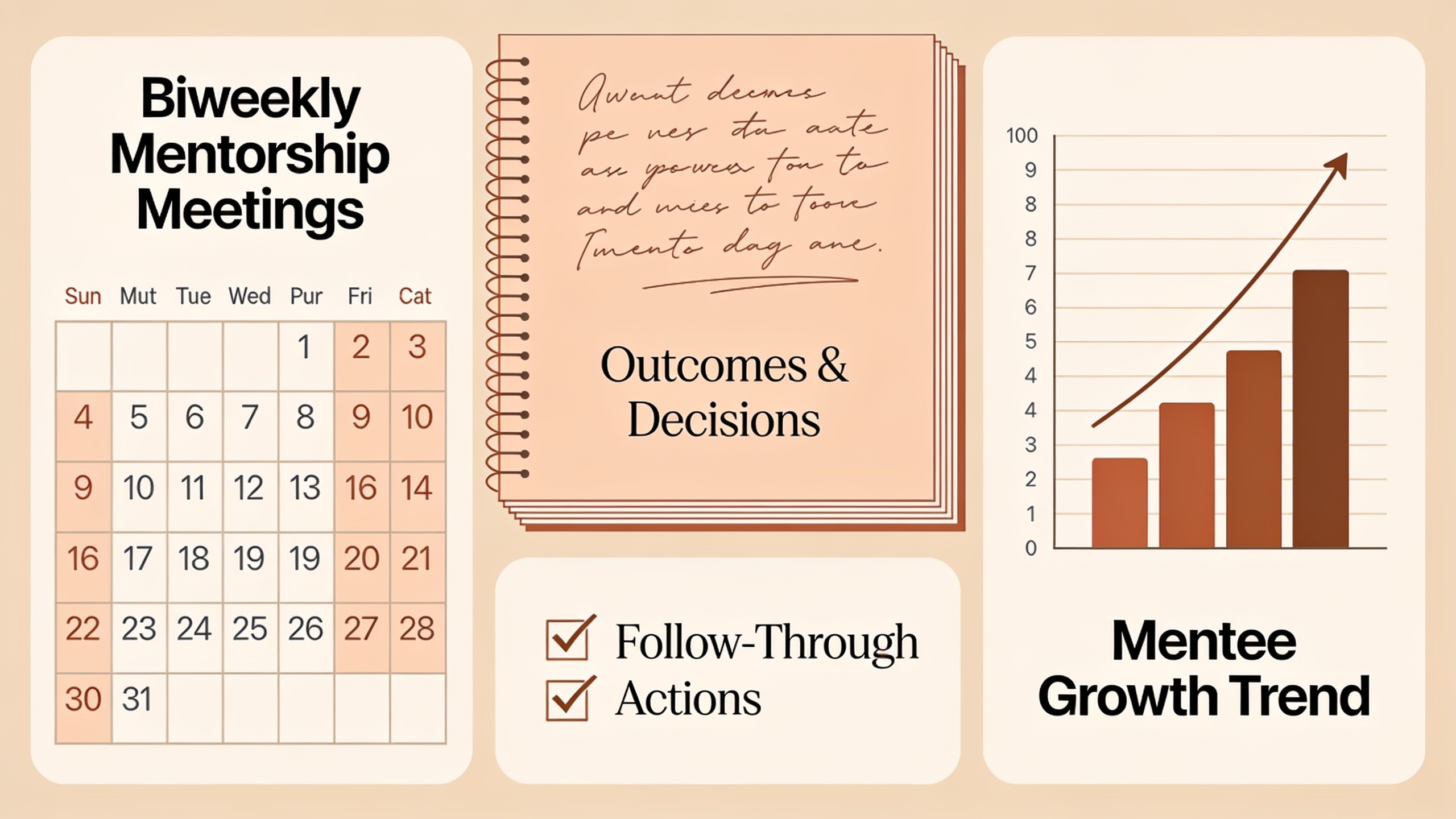
Treat each session like a working meeting, not a hang. Show up with a real decision to make or a real problem to crack, not a chirpy "here's how things are going" update. And be honest about what's broken, because a mentor can't help with a problem you're too embarrassed to mention. Set a rhythm, biweekly or monthly, and keep a dead-simple log of what advice you got and what actually happened when you followed it. Over a few months that log tells you the truth about whether this relationship is worth anyone's time.
Oh, and check the fit every so often. The mentor who was perfect for your seed-stage chaos may not have the chops for your Series B phase. That's not a breakup, it's just growth. Knowing when to bring in someone with more advanced experience is itself a sign you've got good judgment.
FAQ: Common Questions About Choosing a Startup Mentor
How's a growth-stage mentor different from the mentors you get in an accelerator?
Accelerator mentors are usually assigned to you for the length of the program (often 3 to 6 months) and they focus on early traction and getting you fundraise-ready. A growth-stage mentor is someone you pick yourself, engages on an open-ended basis, and zeroes in on scaling problems: building teams, standing up operational systems, later-stage fundraising.
Should I have more than one mentor going at the same time?
A lot of founders do better with two or three mentors who each specialize, say one for go-to-market and one for financial ops, than with a single generalist trying to cover everything. The trick is making sure each person's expertise maps to a distinct problem, so their advice doesn't overlap or, worse, contradict.
How do I know if a mentor's advice actually fits my industry?
Ask them to walk you through a specific, similar situation from their own experience, exactly what they did and why. If they can't get concrete about your industry's customer behavior, sales cycle, or regulatory quirks, their advice is probably too generic to bet a big decision on.
Is it normal to pay a growth-stage mentor?
Less common than with paid consultants, but it happens. Some founders offer small equity grants or modest stipends when a mentor takes on a formal advisory role with real time and accountability behind it. Just nail down the compensation conversation early instead of assuming things will stay casual forever.
How long should a mentor relationship last?
There's no set clock. Some run for years and evolve as the company grows, others are genuinely useful for a specific 6-to-12-month stretch tied to one thing, like a fundraise. Duration matters way less than whether the relationship keeps producing concrete, useful guidance for what you're actually facing right now.
At the risk of repeating myself: picking a growth-stage mentor is less about landing the most impressive résumé and more about finding someone whose specific, recent experience lines up with the exact problem in front of you. The founders who treat this like a key hire (checking specifics, verifying outcomes, deliberately matching stage and industry) get advice that actually moves the business. Everybody else just gets advice that sounds good.